
Three “Colorful” Moons Follow Blood Moon
After March’s Blood Moon, three more “colorful” Full Moons arrive in 2026. Learn why the Pink, Blue, and Strawberry Moons don’t actually change color.

Ramadan is the ninth month of the Islamic lunar calendar and one of the holiest periods in the Muslim faith. In Australia, this sacred month is observed by a diverse and growing Muslim population through daily fasting, prayer, acts of charity, and community gatherings.
Ramadan Start is not a public holiday. Businesses have normal opening hours.

Prayer is central to Ramadan, with Muslims devoting extra time to worship and reflection.
©iStock.com/Jacob Wackerhausen
Best days to take off in Australia in 2026
Because the Islamic calendar is based on the lunar cycle, Ramadan shifts to around 10 or 11 days earlier in the Gregorian calendar each year.
The holy month of Ramadan is the ninth month of the Islamic calendar, and begins with the sighting or calculation of the Waxing Crescent Moon, the very slim crescent that appears just after the New Moon. The fasting month lasts 29 to 30 days, ending with the celebration of Eid al-Fitr.
In Australia, there is no single universal authority that all Muslims follow to declare the start and end of Ramadan. Different communities and organisations may follow different practices, including:
Because the process depends on local Moon sightings and differing practices, communities may announce start and end dates independently, and dates can vary by one day across regions or groups in Australia.
Ramadan is not a public holiday in Australia; therefore, schools, government services, and most businesses generally operate according to their usual opening hours. Some Muslim-owned companies and community organisations, however, may adjust trading hours during the month.
Learn more about Ramadan fasting
Ramadan is widely observed across Australia’s Muslim communities, which include people of Turkish, Lebanese, Indonesian, South Asian, African, and Bosnian heritage, among others. Common practices include:
One of the largest public events is Lakemba Ramadan Nights in Sydney, where food stalls and community celebrations run throughout the month and draw tens of thousands of visitors.
Sunrise and sunset times in your location
Fasting is one of the Five Pillars of Islam and is mandatory for adult Muslims who are healthy enough to fast. However, some people are not required to fast during Ramadan due to the risks it may pose to their health or well-being. Exemptions include:
Ramadan ends when the sighting or calculation of the very slim Waxing Crescent Moon that appears just after the New Moon, marking the beginning of Shawwal, the tenth month of the Islamic calendar. This is celebrated with Eid al-Fitr, a joyful festival marked by special prayers, festive meals, and the exchange of gifts. While not a national holiday, it is widely celebrated by Muslims across Australia.
Note: Regional customs or Moon sightings may cause a variation of the date for Islamic holidays, which begin at sundown the day before the date specified for the holiday. The Islamic calendar is lunar and the days begin at sunset, so there may be one-day error depending on when the Crescent Moon is first seen.
| Year | Weekday | Date | Name | Holiday Type |
|---|---|---|---|---|
| 2021 | Tue | Apr 13 | Ramadan Start | Muslim |
| 2022 | Sat | Apr 2 | Ramadan Start | Muslim |
| 2023 | Thu | Mar 23 | Ramadan Start | Muslim |
| 2024 | Tue | Mar 12 | Ramadan Start | Muslim |
| 2025 | Sun | Mar 2 | Ramadan Start | Muslim |
| 2026 | Thu | Feb 19 | Ramadan Start | Muslim |
| 2027 | Mon | Feb 8 | Ramadan Start (Tentative Date) | Muslim |
| 2028 | Fri | Jan 28 | Ramadan Start (Tentative Date) | Muslim |
| 2029 | Tue | Jan 16 | Ramadan Start (Tentative Date) | Muslim |
| 2030 | Sun | Jan 6 | Ramadan Start (Tentative Date) | Muslim |
| 2030 | Thu | Dec 26 | Ramadan Start (Tentative Date) | Muslim |
| 2031 | Mon | Dec 15 | Ramadan Start (Tentative Date) | Muslim |
While we diligently research and update our holiday dates, some of the information in the table above may be preliminary. If you find an error, please let us know.
After March’s Blood Moon, three more “colorful” Full Moons arrive in 2026. Learn why the Pink, Blue, and Strawberry Moons don’t actually change color.
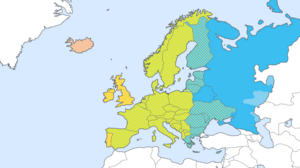
Daylight Saving Time (DST) begins across Europe early Sunday, March 29, 2026. Spain has promised a new push to end clock changes in the European Union.

Discover the phases of the Moon in March 2026. Also: How to see the total lunar eclipse on March 3, and why Artemis II won’t be flying this month.
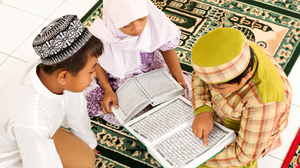
Laylat al-Qadr is most likely to be held on one of the last 10 days of month of Ramadan in the Islamic calendar.