
Three “Colorful” Moons Follow Blood Moon
After March’s Blood Moon, three more “colorful” Full Moons arrive in 2026. Learn why the Pink, Blue, and Strawberry Moons don’t actually change color.

The holy month of Ramadan is one of the most sacred periods in the Islamic Calendar. It commemorates when the first verses of the Qur’an were revealed to the Prophet Muhammad. Muslims observe Ramadan by fasting, praying, and seeking the blessings of Allah.
Ramadan Start is not a public holiday. Businesses have normal opening hours.

Montreal’s first public iftar (the meal that breaks the fast), pictured here, was held in front of St. James United Church on the first day of Ramadan in 2016. Dates, water, and milk were shared with Muslims and passers-by in an event organized by the church and the Muslim Association of Canada.
©iStock.com/Josie Desmarais
Ramadan is the ninth month of the Islamic calendar and is observed by Muslims in Canada and around the world.
The Islamic calendar follows the lunar cycle, so the start of Ramadan shifts to around 10 to 11 days earlier each year in the Gregorian calendar. Over time, this shift allows Ramadan to fall in every season, from the long summer days to the shorter daylight hours of winter in northern Canada.
The beginning of Ramadan is determined either through local Moon sightings or by using astronomical calculations, depending on the preferences of different Muslim communities. Since these methods can sometimes produce different results, the start date may vary by one day between communities.
Ramadan begins with the first sighting of the Waxing Crescent Moon, the very slim crescent that appears just after New Moon. The month lasts 29 or 30 days, ending with the sighting of the next Waxing Crescent Moon, which marks the start of Shawwal, the tenth month in the Islamic calendar, and the celebration of Eid al-Fitr.
Ramadan is not a public holiday in Canada, so schools and businesses generally remain open.
However, Muslim employees and students may request accommodations, such as flexible hours, space for prayer, or time off for religious observance, which are protected under the Canadian human rights laws.
While public life continues as usual, some Muslim-owned businesses or organizations may adjust their hours during Ramadan. There can also be heavier traffic around mosques during prayer times, especially in the evenings.
Ramadan is widely observed across Canada by the country’s diverse Muslim population. Common practices include:
Learn more about Ramadan fasting
Because fasting runs from dawn to sunset, the length of the daily fast varies depending on daylight hours in each region. In Canada—especially in northern areas where days can be very long or very short—Muslims may follow one of several methods commonly recommended by scholars to determine fasting times, such as:
Most Muslims follow the guidance of their local mosque or religious authority when choosing a method.
Sunrise and sunset times in your location
Some people are not required to fast during Ramadan due to the risks it may pose to their health or well-being. Exemptions include:
Ramadan concludes with Eid al-Fitr, a significant Islamic holiday celebrated through communal prayers, festive meals, and the exchange of gifts.
In Canada, Eid is celebrated with large gatherings in mosques, parks, and community halls. Although it is not a statutory holiday, some schools and workplaces may grant leave for observance.
Note: Regional customs or Moon sightings may cause a variation of the date for Islamic holidays, which begin at sundown the day before the date specified for the holiday. The Islamic calendar is lunar and the days begin at sunset, so there may be one-day error depending on when the Crescent Moon is first seen.
| Year | Weekday | Date | Name | Holiday Type |
|---|---|---|---|---|
| 2021 | Tue | Apr 13 | Ramadan Start | Muslim |
| 2022 | Sat | Apr 2 | Ramadan Start | Muslim |
| 2023 | Thu | Mar 23 | Ramadan Start | Muslim |
| 2024 | Mon | Mar 11 | Ramadan Start | Muslim |
| 2025 | Sat | Mar 1 | Ramadan Start | Muslim |
| 2026 | Wed | Feb 18 | Ramadan Start | Muslim |
| 2027 | Mon | Feb 8 | Ramadan Start (Tentative Date) | Muslim |
| 2028 | Fri | Jan 28 | Ramadan Start (Tentative Date) | Muslim |
| 2029 | Tue | Jan 16 | Ramadan Start (Tentative Date) | Muslim |
| 2030 | Sun | Jan 6 | Ramadan Start (Tentative Date) | Muslim |
| 2030 | Thu | Dec 26 | Ramadan Start (Tentative Date) | Muslim |
| 2031 | Mon | Dec 15 | Ramadan Start (Tentative Date) | Muslim |
While we diligently research and update our holiday dates, some of the information in the table above may be preliminary. If you find an error, please let us know.
After March’s Blood Moon, three more “colorful” Full Moons arrive in 2026. Learn why the Pink, Blue, and Strawberry Moons don’t actually change color.
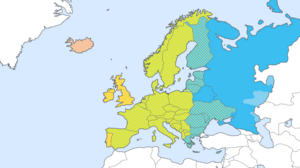
Daylight Saving Time (DST) begins across Europe early Sunday, March 29, 2026. Spain has promised a new push to end clock changes in the European Union.

Discover the phases of the Moon in March 2026. Also: How to see the total lunar eclipse on March 3, and why Artemis II won’t be flying this month.
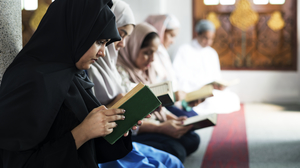
Laylat al-Qadr is most likely to be held on one of the last 10 days of month of Ramadan in the Islamic calendar.