


2026 is packed with celestial highlights, including eclipses, meteor showers, and standout planetary events.
I’m really looking forward to what the sky has to offer this year. It’s all a beautiful display of the celestial mechanics, geometry, and electromagnetism that’s going on behind the scenes, from the Sun-Moon-Earth alignment of eclipses to the colorful light shows of auroras. To think that we are able to understand the world well enough to predict and prepare for these events—it’s simply amazing.
Dr. Renate Mauland-Hus, Astrophysicist
timeanddate.com
Total Eclipse of ...
... the Moon and the Sun! As always, the most exciting sky events for our team here at timeanddate are the eclipses. And 2026 is a good year for eclipses:
- On March 2–3, our mobile observatory will travel to the US (New Mexico or Arizona) to chase a total lunar eclipse. A fully eclipsed Moon is often called a Blood Moon for its reddish color.
- As we are based in Norway, Europe, we look forward to the total solar eclipse on August 12, which can be seen from Europe’s mainland for the first time in 27 years!
We will, of course, live stream this event as well, most likely from Northwestern Spain, since Spain and Iceland offer the best opportunities to see totality.
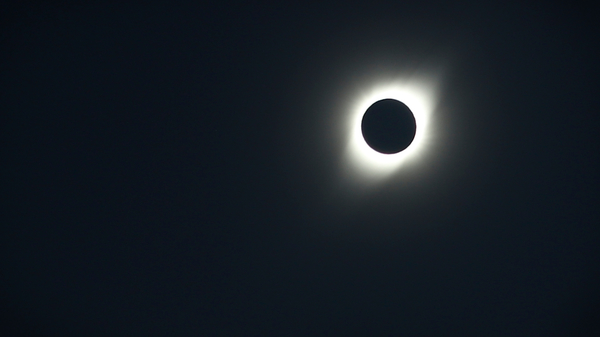
Solar eclipses are special happenings that often bring together many people who have eagerly anticipated them. (Like our loyal eclipse live stream audience.) Solar eclipses are considered a rare sight, even rarer than a lunar eclipse, although they occur every year.

This is because while a solar eclipse is only visible from a very specific path on Earth, a lunar eclipse is visible from every location on the night side of the Earth. Most calendar years have four eclipses, and two of these four are always solar eclipses.
If you’re outside the range of the two eclipses mentioned above, you have the chance again at the end of August, when a partial lunar eclipse is visible to residents of North and South America, most of Europe, and Africa.
The Perseid Meteor Shower, one of the brightest meteor showers of the year, also peaks August 12–13, coinciding with the total solar eclipse. What a fun celestial gathering of events!

Another Great Year for Auroras
2025 was an excellent year for the aurora. Why is that? As reported by our aurora specialist, Eloise Elliott, the high aurora activity during the last year was directly tied to the Sun’s solar cycle:
In 2025, the Sun was still in the solar maximum phase of its 11-year solar cycle. During this phase, solar activity increases, resulting in a greater number of charged particles, as well as more energetic particles heading out into space. This increases the likelihood of solar particles colliding with gases in our atmosphere, leading to stunning auroras.
Eloise Elliott, Web Editor And Journalist
timeanddate.comSo, what can we expect in 2026? Even if recent data suggests solar activity has already peaked, scientists say auroral displays generally remain strong for several years after solar maximum, so some of the most dazzling northern and southern lights may still be pending.
Check out local aurora watch groups and our aurora updates for a chance to see the northern or southern lights glowing in the sky.

The 2026 February Planet Parade: Can We See Them All?
From around mid- to late February, six planets in our solar system will line up along the Sun’s path. Four—Jupiter, Saturn, Venus, and Mercury—will be visible to the naked eye, while Uranus and Neptune require binoculars or a small telescope.
But—and there is a but—it will not be easy to see all the planets in the sky at the same time.
Saturn, Mercury, Venus, and Neptune are closely grouped together. The first three can be seen with the naked eye, but only shortly after sunset. You still need a telescope to see Neptune.
WARNING: Never point binoculars or a telescope in the direction of the Sun—it can cause permanent eye damage. DO NOT try to observe objects close to the Sun while any part of the Sun is above the horizon.
Uranus is higher in the sky, and also requires binoculars or a telescope. Jupiter is easy to spot, shining brightly in the winter sky. There is also a beautiful crescent Moon nearby Saturn. This is what it looks like with our Night Sky Map.
During the planet parade, Saturn and Neptune get really close to each other in the sky. According to our calculations, specifically on February 20, the two planets have their closest approach this decade, and the third closest this century, with an angular separation of roughly 0.83 degrees.
The closest approach this century will happen on June 7, 2061, with a tiny separation of around 0.11 degrees (coincidentally, this is the same year as the return of the famous Halley’s comet). The second closest will be at the end of the century, on August 27, 2096, with a very similar angular separation to what we see this year. Pretty cool, if you ask us!
December: Another Month for Planetgazers
2026 also ends with a planet party in the sky. Around Christmas, Mars, Jupiter, Uranus, Saturn, and Neptune are visible in the night sky at the same time (Uranus and Neptune with binoculars). Venus can also be seen in the early morning, while Mars, Jupiter, and Uranus are still up. Perfect for planetgazers during the long nights around the December solstice in the Northern Hemisphere.
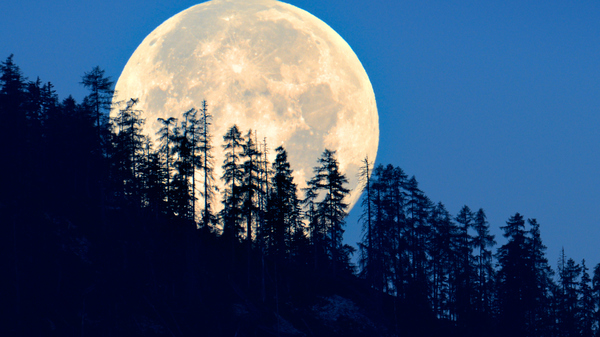
The planets decorate the night sky together with the December Super Full Moon on Christmas Eve itself.
Don’t Miss Out on These Events
In addition to all the happenings mentioned above, there are also several other celestial events to take note of.
- On January 10, Jupiter is at opposition. For weeks to come, it will shine brightly and be visible all night. This is a great chance to catch Jupiter at its best—it won’t be back at opposition again until February 2027. Jupiter also makes a striking pair with the Moon in January, as the Moon swings close by in the sky both at the beginning and end of the month.
- On the evening of January 23, 2026, the Moon, Neptune, and Saturn will appear close together in the night sky. Saturn is among the easiest objects to spot with the naked eye, so no special equipment is required—and of course, the same is true for the Moon. Neptune, however, requires binoculars or a telescope for observation.
- On July 4, Mars and Uranus appear very close together, alongside the Pleiades star cluster in the night sky. According to our calculations, Mars and Uranus will appear at their closest this decade, with an angular separation of 0.11 degrees. Looking at the whole century, this event comes in fourth, with the closest approach already having happened in 2013 (0.01 degrees), and the second and third lined up for 2053 and 2094 (0.05 and 0.07 degrees respectively).
- In mid-November, Jupiter and Mars say hello during the peak of the Leonid meteor shower. They can be seen close to the radiant, the point in the sky from which the meteors appear to emerge, which lies in the constellation Leo.
These are just some of the sky events awaiting us in 2026. Make sure to check out our monthly skywatching tips so you don’t miss out on exciting spectacles.

Frequently Asked Questions
How often do solar eclipses occur?
Most calendar years have four eclipses, and two of these four are always solar eclipses.
Will there be auroras in 2026?
Even if recent data suggests solar activity has already peaked, scientists say auroral displays generally remain strong for several years after solar maximum, so some of the most dazzling northern and southern lights may still be pending.
Can we see all the planets in the February planet parade?
From mid- to late February, six planets in our solar system will line up along the Sun’s path. Four—Jupiter, Saturn, Venus, and Mercury—will be visible to the naked eye, while Uranus and Neptune require binoculars or a small telescope.
But—and there is a but—it will not be easy to see all the planets in the sky at the same time.