
Three “Colorful” Moons Follow Blood Moon
After March’s Blood Moon, three more “colorful” Full Moons arrive in 2026. Learn why the Pink, Blue, and Strawberry Moons don’t actually change color.
Orthodox holidays, also known as Eastern Orthodox holidays, are religious festivals observed by the Eastern Orthodox Christian Church.
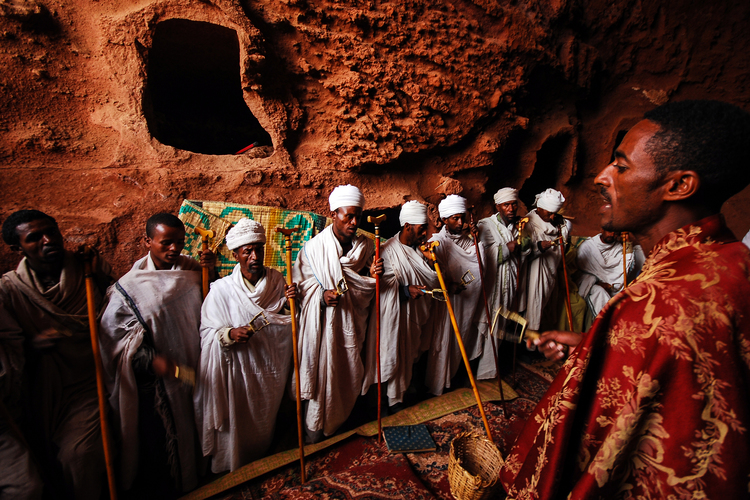
Coptic Christian priests praying in a rock-hewn church in Lalibela, Ethiopia.
©iStock.com/Alphorom
Orthodox holidays are the religious feasts observed in the Eastern Orthodox Church. The predominant religion in countries like Russia and many Eastern European countries, Eastern Orthodoxy is one of the largest Christian denominations in the world.
These are just a few examples of many Orthodox holidays and feast days. The specific observances and traditions can vary among different Orthodox communities and cultures.
At timeanddate.com, we add Orthodox holidays to a country’s calendar if there is a significant Orthodox community in the country or if the holiday is a public holiday.
When we talk about Orthodox holidays, we mean holidays and feast days celebrated by the Eastern Orthodox Christian Church. This denomination of Christianity is different in several key ways:
It’s important to note that despite these differences, the core theological principles and beliefs of the Eastern Orthodox Church align with those of other Christian denominations.
Among the many Christian holidays with different dates in the Orthodox calendar is Christmas.
While Catholic and Protestant denominations celebrate Christmas on December 25, Orthodox traditions celebrate it on or around January 7. This is because December 25 in the Julian calendar falls on January 7 in the Gregorian calendar.
The Orthodox liturgical calendar begins on September 1. This is in contrast to the beginning of the Catholic liturgical calendar, which starts on the first Sunday of Advent or the first Sunday closest to the Feast of St. Andrew, which falls annually on November 30 in the Gregorian calendar.
The Orthodox ecclesiastical or Church calendar has several feasts and fasts. Pascha, or Easter, is the most important feast and the center of the Orthodox liturgical year. It is often called the “feast of feasts.”
In addition, faithfuls have 12 other feasts during the year, some moveable and others that fall on fixed dates. The dates of moveable feasts depend on the date of Pascha, and they are: Palm Sunday, Ascension, and Pentecost.
The Eastern Orthodox Church and its many offshoots also observe four major fasting periods during the year. These are:
In addition, observing Orthodox Christians are obligated to fast every Wednesday and Friday throughout the year.
The Coptic Church, also known as the Coptic Orthodox Church of Alexandria, is a denomination of the Eastern Orthodox Church with roots in parts of Africa and the Middle East. The Church uses the Coptic calendar to set the dates of its holidays and feasts.
Because the Coptic Calendar is tied to the Julian calendar, the Coptic Church also celebrates Christmas on January 7, just like its other Orthodox counterparts.
After March’s Blood Moon, three more “colorful” Full Moons arrive in 2026. Learn why the Pink, Blue, and Strawberry Moons don’t actually change color.
Daylight Saving Time (DST) begins across Europe early Sunday, March 29, 2026. Spain has promised a new push to end clock changes in the European Union.

Discover the phases of the Moon in March 2026. Also: How to see the total lunar eclipse on March 3, and why Artemis II won’t be flying this month.
The Sun shines directly on the Equator on the September equinox and the length of day and night is nearly equal, but not quite.