
Three “Colorful” Moons Follow Blood Moon
After March’s Blood Moon, three more “colorful” Full Moons arrive in 2026. Learn why the Pink, Blue, and Strawberry Moons don’t actually change color.

Many Americans celebrate Halloween on October 31, often with costume parties, trick-or-treating, and festive decorations. It is one of the most commercially significant events in the US.
Even though Halloween falls on Saturday, October 31, 2026, it is a working day. Most businesses follow regular opening hours in United States.

Trick-or-treating is part of the Halloween fun.
©iStock.com/AleksandarNakic
Halloween takes place every year on October 31 in the United States.
Although it’s not a public holiday, it is one of the country’s most visible cultural observances, with communities across the US marking the night with costumes, candy, and celebrations.
Halloween celebrations vary widely but often include:
Halloween’s roots in the United States date back to 19th-century Irish and Scottish immigrants, who brought over medieval traditions such as souling—going door-to-door for soul cakes in exchange for prayers—and guising, where participants performed in disguise for treats.
These practices evolved into trick-or-treating, which grew especially popular after the 1930s. By the 1950s, Halloween had become a firmly established part of American culture.
Immigrants from Ireland also popularized pumpkin carving, adapting older traditions of turnip lanterns into the now-iconic American jack-o’-lanterns. The holiday’s commercialization began in the early 1900s, with postcards and paper decorations, while store-bought Halloween costumes became common by the 1930s.
Halloween in the US shares many of the classic symbols recognized worldwide:
Foods such as candy apples, popcorn balls, pumpkin-flavored treats, and bags of candy are central to celebrations.
In the past, homemade treats like popcorn balls or candied apples were common giveaways, though individually wrapped chocolate bars and packs of candy purchased from a store became the norm by the late 20th century.
Though not a public holiday, Halloween is one of the most commercially significant events in the US, generating billions of dollars annually in spending on costumes, decorations, candy, and entertainment. According to retail trade publications, it ranks among the top consumer holidays after Christmas.
Safety is also an important focus of modern Halloween: parents are encouraged to accompany young trick-or-treaters and check candy, while drivers are urged to watch for children in dark costumes who may be harder to see.
| Year | Weekday | Date | Name | Holiday Type |
|---|---|---|---|---|
| 2021 | Sun | Oct 31 | Halloween | Observance |
| 2022 | Mon | Oct 31 | Halloween | Observance |
| 2023 | Tue | Oct 31 | Halloween | Observance |
| 2024 | Thu | Oct 31 | Halloween | Observance |
| 2025 | Fri | Oct 31 | Halloween | Observance |
| 2026 | Sat | Oct 31 | Halloween | Observance |
| 2027 | Sun | Oct 31 | Halloween | Observance |
| 2028 | Tue | Oct 31 | Halloween | Observance |
| 2029 | Wed | Oct 31 | Halloween | Observance |
| 2030 | Thu | Oct 31 | Halloween | Observance |
| 2031 | Fri | Oct 31 | Halloween | Observance |
While we diligently research and update our holiday dates, some of the information in the table above may be preliminary. If you find an error, please let us know.
After March’s Blood Moon, three more “colorful” Full Moons arrive in 2026. Learn why the Pink, Blue, and Strawberry Moons don’t actually change color.
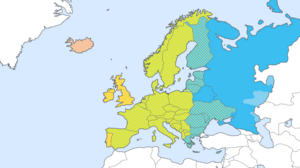
Daylight Saving Time (DST) begins across Europe early Sunday, March 29, 2026. Spain has promised a new push to end clock changes in the European Union.

Discover the phases of the Moon in March 2026. Also: How to see the total lunar eclipse on March 3, and why Artemis II won’t be flying this month.

Many Catholics honor all the saints on All Saints' Day, also known as All Hallows' Day, in the United States.