

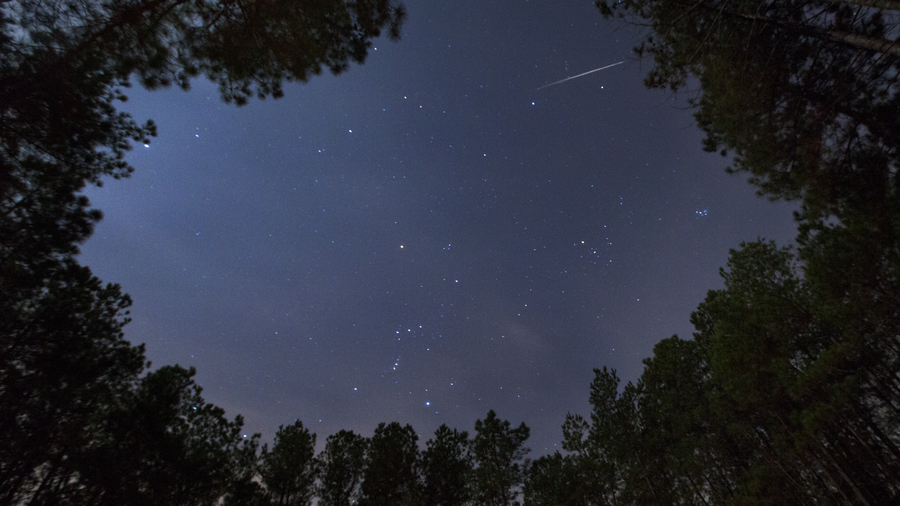
When to See the Geminid Meteor Shower
The Geminids are active between December 4–20, in other words, for over two weeks this month.
However, the maximum, with most meteor activity, is worth noting: The peak dates for the Geminids are always around mid-December, and have for the last two decades been reported between December 13, 15:00 UTC, and December 14, 12:00 UTC, according to the International Meteor Organization.
Your specific peak time will depend on your location and time zone, and when the Gemini constellation is highest in the sky where you are.
For the US and Europe, it peaks the night between December 13 and 14, and for Australia, it peaks the night between December 14 and 15. Use our map to find out which night it peaks for your location.
The meteor shower is considered to be one of the most spectacular meteor showers of the year. There is a possibility of sighting around 120 meteors per hour at its peak in ideal conditions.
The Geminids are known for producing bright, fast meteors that often appear white and yellowish.
More meteor viewing tipsWhere to See the Geminids
Since the Gemenids are active for most of December, there is a chance of seeing them on many different nights, especially around the peak dates. The Geminids have a broad maximum period, and because of this the peak can be seen from almost anywhere in the world.
During a meteor shower, all of the meteors seem to originate from the same area of the sky; this point is called the radiant.
For the Geminids, the radiant is located in the constellation Gemini, naming the Geminid meteor shower.
Meteors can appear in any part of the sky, so you don’t have to find the radiant point specifically. However, it can be helpful to know when the radiant reaches its highest altitude, or its highest position in the sky. Generally speaking, the higher the radiant, the more meteors you can see.
Graham Jones, Astrophysicist
timeanddate.comThe radiant for the Geminid meteor shower is highest in the sky during the late-night and early-morning hours. If you live in a location where the Geminid constellation rises early, this meteor shower can be a great choice for younger skywatchers. The radiant can then be high in the sky as early as 21:00 (9 pm) or 22:00 (10 pm).
What about the Moon?
The Moon can cause trouble for skywatchers by outshining fainter meteors in the sky. Will the Moon interfere this time?
Because the Waning Crescent Moon doesn’t rise until a few hours after midnight on December 14, it won’t hinder meteor viewing too much. Although the Moon’s timing could be better.
For meteor showers, the Moon is at its most helpful when it’s not there! The Moon is the brightest object in the night sky—its glare lights up the darkness and hides fainter meteors.
Graham Jones, Astrophysicist
timeanddate.com
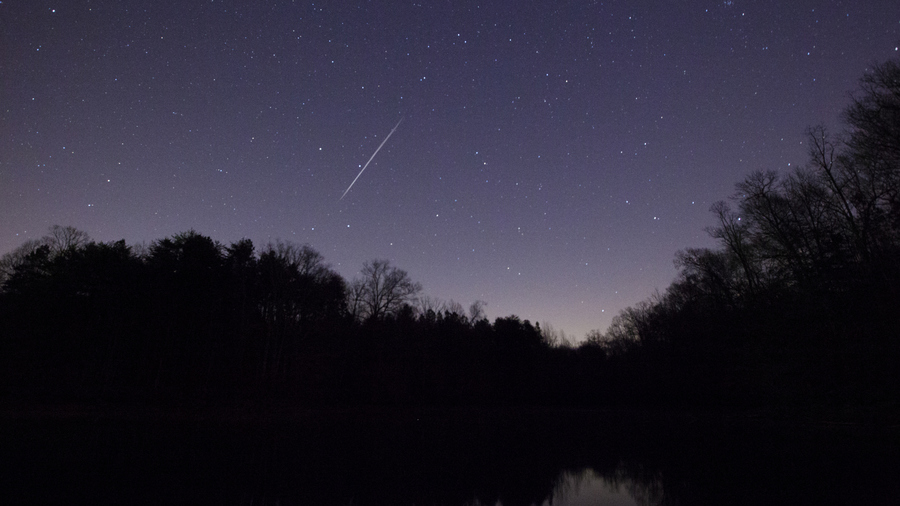
Look Up Sunday Morning
If you’re an early riser, you can still head out before dawn on December 14.
The hours after midnight and before dawn are usually good for meteor watching. This has to do with Earth’s rotation:
In the evening and early nighttime hours, Earth is rotating away from the debris, so the meteoroids have to ‘catch up’ to us. After midnight, however, our planet begins turning directly into the stream, which leads to increased meteor activity.
Dr. Renate Mauland-Hus, Astrophysicist
timeanddate.comWhat to Expect
If skies are dark and clear, skywatchers can witness up to 120 meteors an hour, though this number can be reduced quite a bit depending on local conditions like cloud cover and light pollution. Note that the meteor shower activity is lower in the Southern Hemisphere since the radiant is lower in the sky.
The Waning Crescent Moon will rise a few hours after midnight on December 14. Jupiter is also shining bright and is easy to spot this night.
What Are the Geminids?
The Geminids were first observed in the mid-1800s. Early displays were relatively modest, producing only about 10 to 20 meteors per hour. Since then, the shower has intensified significantly and is now considered one of the most prominent meteor events of the year. It is visible in both the Northern and Southern Hemispheres.
Unlike most other meteor showers, the Geminids are not associated with a comet but with an asteroid: 3200 Phaethon. The asteroid takes about 1.4 years to orbit the Sun.
Dust and debris from the asteroid—known as meteoroids—enter Earth’s atmosphere, creating brief flashes of light as they burn up. These bright streaks across the sky are what we recognize as a meteor shower, also known as shooting stars.
Frequently Asked Questions
Where can I see the Geminids?
Thanks to their broad maximum the Geminids peak can be seen from almost anywhere in the world.
How many meteors can I spot during the Geminids?
There is a possibility of sighting around 120 meteors per hour at its peak. Your specific peak time will depend on your location and time zone, and when the Gemini constellation (radiant) is highest in the sky where you are.
Are there other meteor showers in the near future?
Yes, check out our Meteor Shower Calendar.